 Shiba inu
Shiba inu is an Ethereum meme token whose transfers spend ETH on gas
Shiba inu is a digital token on Ethereum, a shared settlement network, and its ERC-20 rule set makes every SHIB unit interchangeable. Buyers acquire SHIB through an exchange or a decentralized swap, then hold it in exchange custody or an Ethereum-compatible wallet. A direct onchain transfer changes the Ethereum ledger and therefore spends ETH on gas; SHIB itself does not pay that fee. Its main attractions are broad market access, simple transferability, and integration with ShibaSwap and Shibarium.
Last updated:
Bottom line: A direct Ethereum transfer needs ETH, while Shibarium activity pays gas in BONE on chain ID 109.
Should you buy SHIB on an exchange or onchain?
The right SHIB purchase route turns on custody, funding method, withdrawal support, and whether you already hold ETH in a wallet. Coinbase and Kraken use account balances and internal order books; Uniswap and ShibaSwap settle trades through smart contracts.
Exchange custody
An exchange purchase starts with a cash balance, bank transfer, card, or another supported asset. The venue quotes the trade, updates an internal SHIB balance, and controls the withdrawal workflow. Ethereum is not involved when the exchange merely moves value between two customer ledgers. Network selection matters when you withdraw, because the destination wallet must support the same chain that the exchange sends.
Self-custodied purchase
An onchain buyer connects MetaMask or Rabby, selects a SHIB trading pair, reviews the route, and signs with the wallet. The account needs enough input asset for the trade and enough ETH for Ethereum gas. Uniswap and ShibaSwap calculate output from liquidity pools, so the final quote reflects pool fees, route depth, and price impact.
Exchange custody fits a card-funded purchase and removes the need to manage gas before the first trade. An onchain route gives the wallet holder direct control of settlement, token approvals, and the receiving address. It also exposes each cost separately: the swap fee belongs to the pool, price impact comes from the trade relative to available liquidity, and gas pays Ethereum validators. Decide which dependency you prefer before comparing the displayed SHIB quote.
Ethereum gas changes the transfer cost
An Ethereum SHIB transfer costs gas in ETH because the token contract must update account balances on mainnet. The fee equals gas used multiplied by the effective gas price. The adjacent topic is explained in Using Shiba inu.
Ethereum measures execution in gas, while wallets quote its unit price in gwei. One gwei equals 1,000,000,000 wei, and one ETH equals 1,000,000,000,000,000,000 wei. A plain ETH payment has an intrinsic cost of 21,000 gas, whereas an ERC-20 transfer has no single fixed gas total because contract execution and storage state differ. Under EIP-1559, the effective price contains a base fee and priority fee, bounded by the sender's maximum fee. The base fee changes by at most 12.5% between consecutive blocks, and unused gas from the transaction limit is not charged.
In this hypothetical example, both 51,000 gas used and a 20 gwei effective gas price are hypothetical inputs. Multiplying 51,000 by 20 produces 1,020,000 gwei, which equals 0.00102 ETH. The SHIB quantity does not enter that multiplication: sending 1 SHIB and sending 1,000,000 SHIB through the same execution path uses the same cost formula, although the exact gas consumed still comes from the completed transaction.
A decentralized swap executes more contract operations than a direct transfer, so it normally consumes more gas. An exchange trade instead charges its stated trading and withdrawal schedule.
Supply scale shapes every price target
SHIB price targets only become meaningful after multiplying the proposed unit price by the supply used in the calculation. That product is the implied market capitalization.
The SHIB contract minted 1,000,000,000,000,000 tokens at launch with 18 decimal places. One whole SHIB therefore maps to 1,000,000,000,000,000,000 base units in contract accounting. Sending SHIB to a designated burn address removes those units from ordinary circulation, while data services decide which burn addresses to exclude from circulating supply. Market capitalization multiplies a quoted price by a selected supply measure; it does not represent cash stored inside the contract or money available for every holder to withdraw simultaneously.
The unusual supply scale is central to Shiba inu price discussions. Before accepting a price target, identify whether its arithmetic uses total supply, circulating supply, or another stated measure. Market price can move sharply even when the contract and supply are unchanged. That check is more informative than comparing SHIB's tiny unit price with Bitcoin's much larger unit price.
From first purchase to verified balance
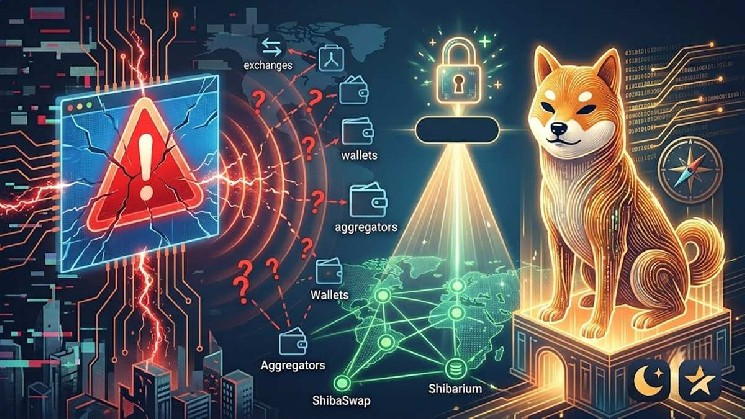
A clean SHIB entry path ends only when the correct network, contract, fee balance, and receiving address all agree. Each field is visible before or after settlement.
Match the Ethereum asset
Ethereum mainnet uses chain ID 1. An Ethereum Virtual Machine address is 20 bytes and appears as 40 hexadecimal characters after the 0x prefix. The Ethereum SHIB contract is 0x95aD61b0a150d79219dCF64E1E6Cc01f0B64C4cE, while your receiving address is a separate account. Contract matching prevents a wallet from displaying an unrelated token that happens to use the same ticker.
Fund the fee asset
Keep ETH in the same Ethereum account that will sign the transaction. A direct SHIB transfer requires one signature and one onchain transaction. The ERC-20 approval flow for a first router swap uses an approval and then the swap, making two onchain transactions. The approval records an allowance; it does not send SHIB to the router by itself. An unused allowance remains until it is changed (detailed in Shiba inu checklist ).
Confirm the state change
After signing, follow the transaction hash in Etherscan. A pending status means Ethereum has not yet included the transaction, while a successful receipt records the gas used and emitted events. The ERC-20 Transfer event identifies the sending address, receiving address, and token amount. If the wallet does not display SHIB automatically, adding the verified contract changes the interface view without moving the balance. An exchange withdrawal adds its own processing step before the onchain transaction appears.
Exchange custody hides most contract fields behind one balance screen; self-custody makes the network, contract, allowance, gas, and receipt directly inspectable.
Transfers, swaps, and Shibarium use different fee assets
SHIB supports three distinct activities: holding or transferring on Ethereum, trading through liquidity pools, and using a bridged representation on Shibarium. The action determines the fee asset and contract path.
Ethereum transfers
Receiving SHIB requires no gas from the recipient. The sending account pays ETH when it calls the token contract, and the amount received equals the amount transferred because the original SHIB contract does not levy a transfer tax. A custodial platform may apply a separate withdrawal charge before broadcasting its Ethereum transaction.
ShibaSwap pools
ShibaSwap V1 uses an automated market maker and charges a fixed 0.3% pool fee on swaps. ShibaSwap V2 concentrated-liquidity contracts define 0.05%, 0.3%, and 1% fee tiers. The chosen pool sets that percentage, while trade size relative to active liquidity sets price impact. Ethereum gas remains a separate ETH-denominated cost for an Ethereum swap.
Shibarium activity
In day-to-day use, Shibarium mainnet uses chain ID 109 and BONE as its gas asset. BONE uses 18 decimal places, and SHIB deployed on Shibarium has a different contract address from Ethereum SHIB. Moving an asset through a bridge is a contract workflow across networks, not an ordinary wallet-to-wallet transfer. The wallet must hold BONE for later Shibarium transactions, even when the asset being moved or traded is SHIB.
Ethereum offers the widest ERC-20 integration path, Shibarium changes the fee asset and execution environment, and exchange custody postpones onchain costs until withdrawal.
The ERC-20 contract records ownership and approvals
The SHIB contract follows ERC-20 state transitions: six required functions expose supply, balances, transfers, and allowances, while two events report Transfers and Approvals. A direct transfer calls transfer and changes sender and recipient balances; a router normally uses approve plus transferFrom. Even a zero-value transfer must emit the Transfer event under ERC-20. The contract uses 18-decimal accounting, and Ethereum validators execute the call before recording the state change. This standardization lets MetaMask, Ledger, Etherscan, Uniswap, and ShibaSwap read the same token.
Which alternatives change the workflow?
Dogecoin, Ether, Bitcoin, Pepe, and USD Coin each replace one SHIB trade-off with a different chain, fee asset, supply model, or application role. Their unit prices are not a useful comparison by themselves.
Dogecoin runs on its own unspent-transaction-output ledger, pays fees in DOGE, and targets one-minute blocks. Ether is Ethereum's native asset, pays gas directly, and needs no token approval for an ordinary transfer. Bitcoin also uses an unspent-transaction-output ledger, targets ten-minute blocks, and caps issuance at 21,000,000 BTC. Pepe is another Ethereum ERC-20 meme token, so its wallet and gas workflow resembles SHIB. USD Coin is an issuer-backed ERC-20 stablecoin designed to track the US dollar.
The decision turns on the job. Native-chain payments point toward DOGE or BTC, Ethereum application access favors ETH and ERC-20 assets, and a stable accounting unit points toward USD Coin. SHIB combines meme-token market exposure with access to ShibaSwap and Shibarium, while retaining Ethereum's gas and smart-contract dependencies.
Shiba inu: questions and answers
Which hardware wallets can hold SHIB?
Hardware wallets supporting Ethereum ERC-20 tokens can hold SHIB at an Ethereum address. Ledger and Trezor devices connect through Ledger Live, MetaMask, or Rabby for balance display and signing. The device protects the private key; the balance remains recorded by the SHIB contract. Add the token contract if the wallet hides the balance, and keep ETH at that address for a later transfer.
Does holding SHIB create rewards automatically?
Holding SHIB in a wallet does not create protocol rewards by itself. Rewards require a separate activity, such as supplying liquidity, locking tokens in a supported staking contract, or joining another application with explicit terms. ShibaSwap liquidity positions earn pool fees only while capital remains supplied, and concentrated positions earn fees only while liquidity is active within the chosen range. Each action adds contract, market, lock-period, and withdrawal conditions beyond simple token ownership and exit timing.
Are SHIB balances private on Ethereum?
SHIB balances and transfers are public at the address level, not private account records. Etherscan and Ethereum clients read balances, transaction hashes, and Transfer events from the shared ledger. An address is pseudonymous because the protocol does not place a name inside it, yet services may associate an address with an account through their records. A new wallet does not change onchain history.
How long does an Ethereum SHIB transfer take?
An Ethereum SHIB transfer confirms when a validator includes it in a block and later blocks build on that result. Ethereum uses 12-second slots, but inclusion is not promised in the next slot. The effective gas price, network demand, wallet nonce order, and an exchange's withdrawal processing affect elapsed time. A pending transaction remains unresolved; a successful receipt containing a Transfer event shows that Ethereum recorded the token movement. Exchange batching can add another delay.
Who created SHIB and when did it launch?
SHIB was created by the pseudonymous Ryoshi and launched on Ethereum in 2020. The launch created an ERC-20 token rather than a company share or claim on revenue. Subsequent ecosystem products use separate contracts, tokens, and governance mechanisms, so their operation should not be inferred from SHIB ownership alone. The original token contract remains the durable identifier for Ethereum-based SHIB balances and transfers.